
Quick answer: Diving in Aqaba is one of the best Red Sea experiences in Jordan for beginners, certified divers, snorkelers, and mixed beach-day groups. Aqaba offers accessible reef dives, famous wreck sites such as Cedar Pride and the C-130 Hercules, beginner diving experiences, PADI courses, snorkeling areas, beach clubs, and dive centers that serve different skill levels.
This is the main WowJordan hub for diving in Aqaba. Use it to understand the best dive experiences, when to dive, how to compare dive centers, which sites are suitable for your level, and how diving fits with beaches, snorkeling, boat trips, South Beach, and wider Aqaba travel planning.
If you are still planning the full trip, start with the Aqaba Jordan travel guide. If you already know you want to dive, this page will help you choose the right underwater experience and connect you with the most relevant Aqaba diving guides and listings.
Diving in Aqaba at a Glance
| Experience | Best for | Skill level | Time needed |
|---|---|---|---|
| Discover Scuba Diving | First-time divers who want to try scuba once | Beginner | Half-day |
| Shore diving | Easy access, relaxed dives, shorter logistics | Beginner to certified | Half-day |
| Reef diving | Coral, fish life, photography, relaxed underwater scenery | Beginner to certified | Half-day |
| Wreck diving | Cedar Pride, C-130 Hercules, TriStar, military sites | Certified divers | Half-day or full day |
| PADI Open Water Course | New divers who want certification | Beginner | Multi-day |
| Snorkeling | Families, non-divers, lighter Red Sea experience | No certification | 1–3 hours |
| Beach club sea day | Mixed groups where not everyone wants to dive | No certification | Half-day or full day |
Why Aqaba Is a Strong Diving Destination
Aqaba works well because it gives travelers direct access to the Red Sea without complicated planning. Many dive experiences are close to the city, South Beach, or beach-club areas, which makes Aqaba practical for short stays, weekend trips, family travel, and wider Jordan itineraries that also include Petra or Wadi Rum.
The strongest advantage is flexibility. Some visitors come for serious diving, wrecks, and certification. Others only want snorkeling, a beginner dive, a boat trip, or a beach day with optional sea activities. Aqaba can serve all of these travel styles in one destination.
Conditions can vary by season, wind, visibility, site, and daily sea movement, so divers should always confirm the plan with their chosen dive center before entering the water. Do not choose a dive only because it looks impressive online. Choose based on your certification, recent experience, comfort level, and the operator’s daily assessment.
Who Should Dive in Aqaba?
Aqaba is suitable for different types of visitors:
- First-time divers who want a safe, guided introduction
- Certified divers looking for Red Sea reefs and wrecks
- Travelers who want to combine diving with beaches and food
- Families or groups where some people dive and others snorkel
- Visitors planning a southern Jordan route with Petra and Wadi Rum
- Beginners considering a full PADI Open Water certification
- Photographers interested in reefs, wrecks, and underwater structure
If you are comparing diving as part of a full activity plan, also read Top 26 Things to Do in Aqaba so the diving day fits properly with beaches, restaurants, Ayla, boat trips, and Wadi Rum.
Diving, Snorkeling, and Water Activities: Which One Should You Choose?
Not every traveler needs scuba diving. Aqaba is strongest when you choose the right Red Sea experience for your group.
Choose diving if you want a guided underwater experience, reef sites, wrecks, deeper exploration, or certification.
Choose snorkeling if you want an easier sea activity without training or tanks. Snorkeling is better for families, non-divers, and visitors with limited time.
Choose a beach club if you want comfort, food, shade, facilities, and a flexible day where some people swim while others relax.
Choose a boat trip or semi-submarine style experience if you are traveling with non-swimmers, older guests, children, or people who want to see the Red Sea without entering the water.
For beach planning, connect this guide with Best Beaches in Aqaba and South Beach Aqaba. These pages help you decide whether your sea day should be reef-focused, beach-club focused, or more relaxed.
Best Time to Dive in Aqaba
Aqaba can work for diving across the year, but the experience changes by season.
Spring is usually comfortable for many travelers because the weather is easier above water and conditions can suit training, reef dives, and photography.
Summer brings hotter weather, so early starts are better. Divers who visit in summer should plan hydration, sun protection, and rest time carefully.
Autumn is often a strong period for balanced temperatures and general Red Sea activity planning.
Winter can still work, especially for divers who prefer quieter periods, but exposure protection and comfort should be discussed with the dive center.
There is no single perfect month for everyone. Beginners usually care about comfort and calm planning. Certified divers may care more about site choice, visibility, wreck access, and crowd levels. Photographers may care more about light and water clarity. The right season depends on your comfort, certification, and travel style.
First-Time Diving in Aqaba
Aqaba is a practical place to try scuba for the first time because beginner experiences can be arranged through local dive centers, often with shallow training, controlled instruction, and guided underwater time.
If you are nervous, do not start with the most famous wreck or the most ambitious plan. Start with a beginner-friendly reef or a Discover Scuba-style session. Your first dive should build confidence, not pressure.
Before booking, ask the dive center:
- Is this suitable for a complete beginner?
- How long is the briefing?
- How many people are with one instructor or guide?
- Is the dive from shore or boat?
- What equipment is included?
- What happens if I feel uncomfortable underwater?
- Is insurance or medical declaration required?
If you want a full certification instead of a one-time trial, continue to PADI Open Water Course Aqaba.
PADI Courses in Aqaba
Aqaba is suitable for travelers who want to learn scuba diving properly, not only try it once. The most common starting point is the Open Water course, which is designed for beginners who want to become certified divers.
A simple way to choose:
- Choose Discover Scuba if you want one beginner experience before deciding.
- Choose Open Water if you already know you want certification.
- Choose Advanced or specialty training only if you already have the right base certification and recent dive comfort.
When comparing courses, do not choose only by price. Check course structure, instructor experience, student numbers, included equipment, training location, certification agency, cancellation policy, and what happens if weather or sea conditions affect the schedule.
For a dedicated beginner certification guide, use PADI Open Water Course Aqaba.
Best Dive Sites in Aqaba
Aqaba has enough underwater variety to support different levels of divers. Some sites are better for beginners, some for photography, some for wreck interest, and some for stronger certified divers.
For a dedicated site-by-site breakdown, read Best Dive Sites in Aqaba. Below is the hub-level overview.
Cedar Pride
Cedar Pride is Aqaba’s signature wreck dive and one of the most recognizable underwater sites in Jordan. It is usually treated as a certified-diver experience and should be planned with a professional operator who can match the dive to your level, conditions, and comfort.
This site is strong for divers who want structure, atmosphere, and a memorable Red Sea wreck experience. It is also useful for underwater photography, but only if the diver has good buoyancy and enough control to avoid damaging reef growth or disturbing the site.
Japanese Gardens
Japanese Gardens is one of Aqaba’s best-known reef areas. It is attractive for divers who want coral scenery, fish life, and a colorful Red Sea environment rather than a wreck-focused dive.
This type of site can work well for relaxed diving, photography, and divers who want a classic reef experience. Beginners should still follow guide instructions and avoid touching coral, standing on reef structures, or chasing marine life.
Seven Sisters
Seven Sisters is often associated with easier reef-style diving and a relaxed underwater profile. It can be a good option for divers who want something interesting without making the day too demanding.
This kind of site is useful for building confidence, especially when combined with careful buoyancy control and a clear dive briefing.
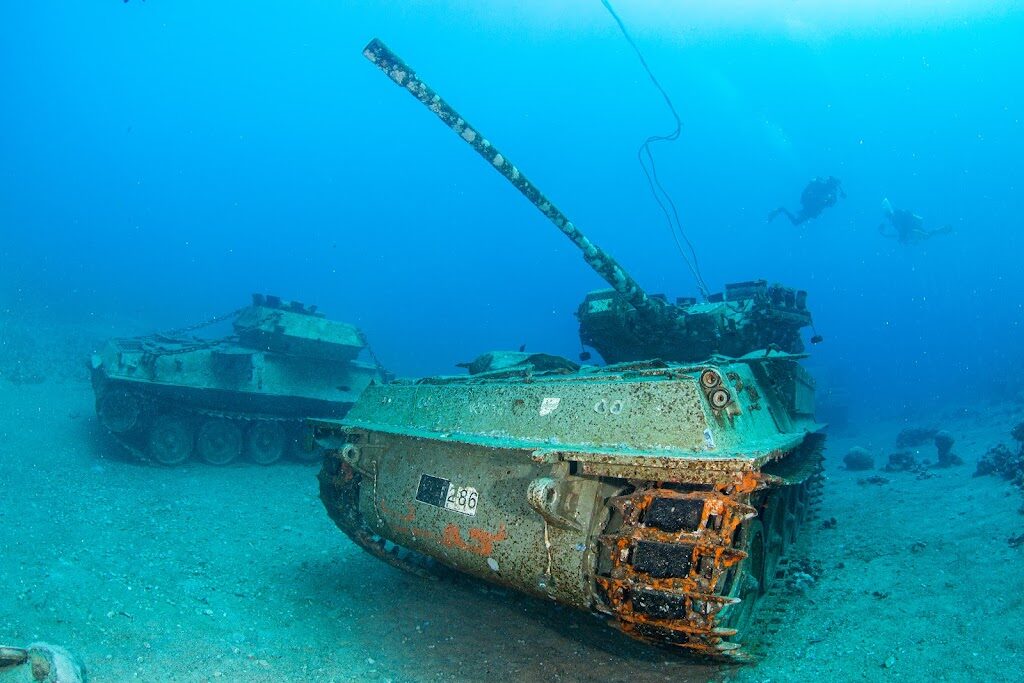
The Tank
The Tank is one of Aqaba’s recognizable artificial underwater attractions. It can be a good option for divers who want a distinctive but easier visual site compared with deeper or more complex wrecks.
The site is especially useful for photos and for divers who want a memorable underwater feature without turning the dive into an advanced wreck profile.
C-130 Hercules
The C-130 Hercules is one of Aqaba’s strongest aircraft wreck attractions. It is visually distinctive and can be a major reason certified divers choose Aqaba.
This site should be planned based on certification level, current conditions, and guide recommendation. Do not assume every wreck is suitable for every diver.
Underwater Military Museum
The Underwater Military Museum gives Aqaba a different kind of dive identity. Instead of only reefs and natural formations, divers can experience an arranged underwater attraction with military vehicles and structures.
This can be interesting for divers who want something unusual, but the same rules apply: stay controlled, respect the site, and follow your guide’s briefing.
Lockheed TriStar
The Lockheed TriStar adds another aircraft-based dive experience to Aqaba’s underwater offer. It is better suited to divers who are comfortable, certified, and guided properly according to conditions.
For newer divers, it is better to build experience first before choosing more ambitious wreck profiles.
South Beach and Aqaba Marine Areas
South Beach is important for Aqaba diving and snorkeling because it connects strongly with reef access, dive logistics, and sea-based activities. It is not the same as a city-center beach experience. South Beach is more marine-focused and better suited to visitors whose main reason for visiting Aqaba is the Red Sea.
Use the South Beach Aqaba guide to understand how this area fits with diving, snorkeling, beaches, and nearby facilities.
Marine Life and Underwater Photography
Aqaba is not only about wrecks. Reef life is a major part of the Red Sea experience. Depending on site and conditions, divers may see reef fish, coral structures, schooling fish, and marine life that makes shallower reef dives worthwhile.
Good underwater photography starts with control, not camera size. Before taking photos, secure your equipment, manage your buoyancy, stay off the reef, avoid stirring sand, and do not chase animals. A patient diver usually gets better photos and causes less damage.
For wreck photography, wide-angle shots can work well. For reef areas, slower movement and close attention to light, coral, and fish behavior are more useful.
Safety, Certification, and Skill Matching
The most important rule in Aqaba diving is simple: match the dive to your current skill level, not your ambition.
Beginner divers should start with easier reefs, shallow profiles, and controlled conditions.
Certified but rusty divers should consider a check dive or easier first dive before choosing wrecks or deeper profiles.
Experienced divers can plan more varied sites, but still need to follow local guide decisions and daily condition checks.
Before diving, be honest about:
- Your certification level
- Your last dive date
- Your comfort with buoyancy
- Your air consumption
- Any medical concerns
- Whether you are nervous or out of practice
- Whether you prefer shore or boat diving
A professional dive center should prefer a safe, suitable dive over an aggressive itinerary.
Gear and Rental Tips
Many visitors rent equipment locally in Aqaba, while experienced divers may bring personal items such as mask, dive computer, exposure protection, or fins.
When renting, check:
- Mask fit
- Wetsuit comfort
- Regulator condition
- BCD sizing
- Tank setup
- Weighting
- Computer or depth/timing system
- Briefing quality
- Emergency plan
Do not ignore small discomforts. A leaking mask, poor fit, or unclear briefing can ruin an otherwise good dive. If something feels wrong before the dive, raise it early.
How to Choose a Diving Center in Aqaba
Do not choose a dive center only by price. Cheap diving can become expensive if the experience is rushed, poorly briefed, or not matched to your level.
Better questions include:
- Does the center handle beginners, certified divers, or both?
- Are shore dives, boat dives, or both available?
- Is the center suitable for families or mixed groups?
- Is equipment included and well maintained?
- Are briefings clear and professional?
- Are groups kept at a reasonable size?
- Does the center explain safety procedures properly?
- Does the center help you choose sites based on conditions and level?
For comparison, use Best Diving Center in Aqaba. You can also check relevant WowJordan listings such as Sindbad Dive Club, Aqaba International Dive Center, and Barracuda Diving & Marine Service.
Diving for Mixed Groups and Families
Aqaba is strong for mixed groups because not everyone needs to dive. One person can book a dive, another can snorkel, and others can spend the day at a beach club or join lighter sea activities.
This is useful for families, couples with different comfort levels, and groups where only some travelers are certified. Instead of forcing everyone into one activity, build the day around a flexible Red Sea base.
For a mixed beach and sea day, Berenice Beach Club can be relevant because it connects beach access with broader sea activity planning. If your group wants more general beach comparison, use Best Beaches in Aqaba.
1-Day, 2-Day, and 3-Day Aqaba Diving Plans
1-Day Beginner-Friendly Diving Plan
Use one easy beginner dive or Discover Scuba session as the main activity. Keep the rest of the day light: lunch, beach time, Corniche walk, or a relaxed dinner.
Do not schedule a difficult site, a long boat plan, and heavy evening movement on the same day if it is your first dive.
2-Day Certified Diver Plan
Use the first day for an easier reef or check-style dive. Use the second day for a stronger site if your guide confirms that your skill level and conditions are suitable.
This is a better plan than trying to jump directly into the most famous wreck without warming up.
3-Day Aqaba Diving Plan
Use one day for reef diving, one day for a signature wreck or artificial site, and one day for either a second wreck, a lighter dive, or a beach/snorkeling day with the rest of your group.
This gives you variety without exhausting the trip or ignoring non-diving parts of Aqaba.
Responsible Diving in Aqaba
Aqaba’s underwater sites are valuable because they combine reefs, marine life, wrecks, and artificial structures in a small coastal area. That also means bad diving behavior can cause real damage.
Follow these rules:
- Do not touch coral.
- Do not stand on reef areas.
- Do not feed marine life.
- Keep fins away from coral and sand.
- Secure dangling equipment.
- Practice buoyancy before focusing on photos.
- Follow the dive guide’s route and briefing.
- Do not remove anything from the sea.
- Avoid crowding marine life for photos.
Responsible diving is not only environmental. It also improves safety and makes the experience better for everyone in the group.
Practical Logistics for Diving in Aqaba
Aqaba is compact, but planning still matters. Your dive day can involve hotel pickup, equipment fitting, briefing, shore transfer, boat transfer, surface intervals, lunch, and post-dive rest.
Before booking, confirm:
- Start time
- Meeting point
- Transfer arrangement
- Number of dives
- Shore or boat plan
- Included equipment
- Food and drinks
- Certification requirement
- Medical declaration
- Cancellation policy
- Payment method
- What non-divers can do during the activity
If you are flying after diving, ask your dive center about safe surface interval guidance before booking flights or high-altitude travel.
Where This Page Fits in the Aqaba Diving Cluster
This page is the main hub for diving in Aqaba. Use the supporting pages depending on your next decision:
- For site comparison, read Best Dive Sites in Aqaba.
- For choosing an operator, read Best Diving Center in Aqaba.
- For beginner certification, read PADI Open Water Course Aqaba.
- For beach and snorkeling areas, read South Beach Aqaba.
- For wider Aqaba planning, read the Aqaba Jordan travel guide.
- For full activity planning, read Top 20 Things to Do in Aqaba.
Final Recommendation
If you are new to diving, start with an easy guided experience or a proper beginner course. If you are certified, choose your dive sites based on your level, recent experience, and daily sea conditions. If your group includes non-divers, build the day around a beach club, snorkeling, or a lighter Red Sea activity so everyone can enjoy Aqaba without pressure.
Diving in Aqaba is strongest when it is planned as part of the full Red Sea experience: reefs, wrecks, snorkeling, beaches, seafood, South Beach, and the wider southern Jordan route.
FAQs
Yes, Aqaba is good for diving because it offers Red Sea reefs, wreck sites, shore and boat diving options, beginner experiences, PADI courses, snorkeling areas, and dive centers that serve different skill levels. It is especially useful for travelers who want to combine diving with beaches, Wadi Rum, Petra, and a wider Jordan itinerary.
Yes, diving in Aqaba can be suitable for beginners when booked through a professional dive center and matched to the visitor’s comfort level. First-time divers should choose a beginner-friendly guided dive or Discover Scuba-style experience before attempting more advanced sites. A clear briefing, suitable equipment, shallow training, and honest communication with the instructor are important.
Some of the best-known dive sites in Aqaba include Cedar Pride, Japanese Gardens, Seven Sisters, The Tank, C-130 Hercules, the Underwater Military Museum, Power Station, and the Lockheed TriStar. The best site depends on certification level, recent experience, sea conditions, and whether the diver wants reefs, wrecks, photography, or an easier first dive.
Aqaba can be used as a diving destination across the year, but the best time depends on comfort, sea conditions, and travel style. Spring and autumn are often comfortable for many travelers, summer is hotter and better planned with early starts, and winter can be quieter but may require better exposure protection. Always confirm daily conditions with the dive center.
Yes, non-divers can enjoy Aqaba through snorkeling, glass-bottom boats, beach clubs, boat trips, semi-submarine style sea experiences, South Beach, and relaxed Red Sea swimming. Aqaba is useful for mixed groups because divers and non-divers can often enjoy the same destination without needing the same activity.
Choose scuba diving if you want a guided underwater experience, reef depth, wrecks, or certification. Choose snorkeling if you want an easier Red Sea activity without tanks, training, or a full dive commitment. Families, non-swimmers, and short-stay visitors may prefer snorkeling or glass-bottom boat experiences, while adventure travelers may prefer scuba.
Aqaba can work for both shore diving and boat diving. Shore diving is useful for easier logistics, beginner-friendly plans, and shorter dive days. Boat diving can be better for specific sites, group trips, and divers who want a wider Red Sea experience. The better choice depends on the dive site, weather, operator, certification level, and group needs.
Before booking a dive center in Aqaba, check whether the center suits your skill level, whether equipment is included, whether the dive is shore-based or boat-based, how many divers are in the group, what sites are planned, what safety briefing is provided, and whether the center supports beginners, certified divers, courses, or mixed groups.
Yes, visitors can take beginner diving courses in Aqaba, including Open Water-style certification programs through qualified dive centers. Travelers should confirm the certification agency, course duration, included equipment, instructor language, medical requirements, number of training dives, and whether the schedule fits their Jordan itinerary.
For diving in Aqaba, bring swimwear, towel, water, sun protection, comfortable clothing, and any personal dive items you prefer such as a mask, computer, or exposure protection. Most visitors can rent main equipment locally, but fit and comfort should be checked carefully before entering the water.
Yes, Aqaba is known for several wreck and artificial underwater attractions, including Cedar Pride, C-130 Hercules, the Underwater Military Museum, and the Lockheed TriStar. Wreck suitability depends on certification level, conditions, guide recommendation, and the diver’s recent experience. New divers should not choose advanced wreck profiles too early.
One day is enough for a first dive or one short dive plan. Two days allow a better mix of reef diving and a stronger site if conditions and certification allow. Three days are better for divers who want a broader Red Sea experience with reefs, wrecks, relaxed surface intervals, and time for non-diving Aqaba activities.
Yes, South Beach is important for diving and snorkeling in Aqaba because it is closely connected with reef access, sea activities, and many Red Sea experiences. It is more marine-focused than city-center beach areas and is useful for visitors who care most about snorkeling, diving, and reef-based activities.
Diving in Aqaba can be safe when visitors choose a professional operator, follow the briefing, use suitable equipment, respect certification limits, monitor conditions, and avoid dives beyond their ability. Safety depends on behavior, planning, guide quality, weather, sea movement, and honest communication about experience and medical fitness.
Yes, families can plan a diving day in Aqaba if the activity is matched to everyone’s comfort level. Some family members may dive, while others snorkel, swim, relax at a beach club, or join a lighter boat activity. This makes Aqaba useful for mixed groups where not everyone wants the same level of underwater activity.