
Critical Thought Courses in Jabal Al-Weibdeh
The Institute for Critical Thought is a university-type establishment in Amman, located on Muhammad Tash. It is closely associated with Jabal Al-Weibdeh, a central neighborhood many visitors recognize for its cultural feel and walkable city setting—useful context if you’re searching for academic spaces in that area.
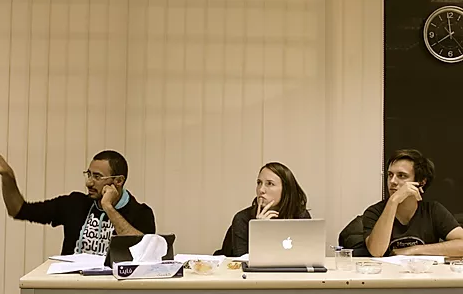
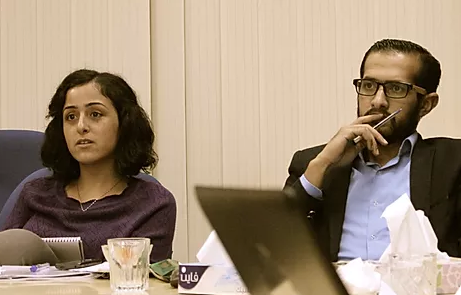
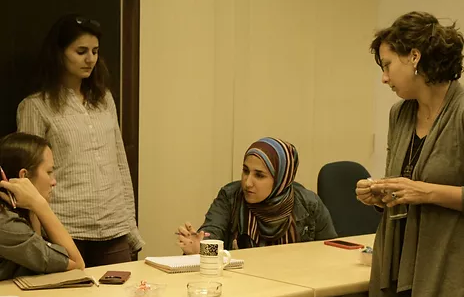
The institute is known for seminars and reading groups that bring scholars and learners together around research, discussion, and intellectual exchange. People describe joining courses in both Arabic and English, with topics ranging from poetic and philosophical traditions to critical theory and related fields—often in formats that include seminars, lectures, and sessions.
Beyond the program content, the place is frequently associated with a thoughtful learning environment: supportive guidance, mentoring, and deep engagement with participants’ work. For visitors in Amman looking for a community-oriented academic setting—especially near Jabal Al-Weibdeh—the institute is a practical option to consider when searching for critical thought courses, research-focused dialogue, and structured intellectual programming.
Categories
Regions
Location
Similar Listings

Nearby Listings
Google Reviews
 Read More Reviews
 Add Review
-
-
I would strongly caution anyone against this organization. My experience left me questioning whether this is a legitimate institute at all. During my tour with Abdullah Awad, I was taken through what appeared to be private residences rather than an institutional office. I also observed that the office space appeared to double as a family bedroom, which I found highly unprofessional and unsettling. When I asked why there was no exterior signage identifying the location as an institute, Abdullah laughed and told me that "he was the institute." That response only reinforced my concerns. During our conversation, Abdullah Awad also made comments about plagiarism, copyright, and violence that I found deeply concerning and inconsistent with the standards I would expect from an educational organization. Those comments further undermined my confidence in the organization's integrity. He couldn’t tell me why there were no photos of him on the website but plenty of photos of “alumni”. Instead of inspiring confidence, the experience raised more questions than answers. I also found the Google review history noteworthy. After an honest critical review was posted by someone I know, I noticed that a number of positive reviews appeared afterward. I can't speak to the reasons behind those reviews, but the timing struck me as unusual. I also recognized that some of the reviewers appeared to be related to Abdullah Awad, which readers may wish to consider as they evaluate the reviews. If you're considering getting involved, I recommend asking detailed questions, requesting documentation showing the organization is registered, and speaking with current and former employees. I personally know someone who was asked to sign a gag order, which is something prospective volunteers and employees may want to consider before committing their time, money, or support.
-
-
When I was in Amman last summer, I got introduced to The Institute for Critical Thought and I was immediately surprised to find such an elaborate institute in the heart of Amman. They offer amazing seminars both in English and Arabic covering really important themes and topics. I think it is a rare chance to have an institute like this with limited resources.
-
I can't recommend this place enough! I took three summer seminars at the institute over the course of the last five years, and attended many lectures and events. My time here helped me improve my Arabic a lot and opened my eyes to areas of Islamic studies and critical theory I had little exposure to before. I ended up applying for doctoral programs and have since started at Princeton, thanks in large part to the time I spent here. I met many brilliant people at the institute, and benefited immensely from the expansive discussions we had there without the same competitive pressures I've often faced in American academia. As far as I'm aware, there are few, if any, institutes in the region combining this level of instruction in critical social theory with a core commitment to progressive pedagogy.


Leave a Reply
You must be logged in to post a comment.