
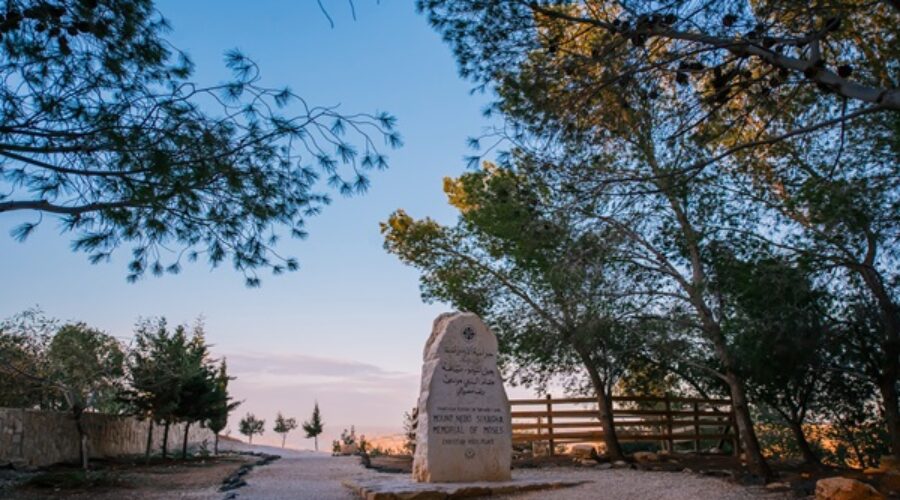
Mount Nebo Jordan Guide: Viewpoint, Church & Mosaics
Updated May 2026
Mount Nebo Jordan Guide: Viewpoint, Church, Mosaics and Visit Tips
Mount Nebo in 30 seconds
Mount Nebo Jordan is a sacred hilltop near Madaba, traditionally known as the place where Moses viewed the Promised Land. Most visitors come for the Memorial Church of Moses, the Byzantine mosaics, the Brazen Serpent sculpture, and the wide viewpoint over the Jordan Valley and Dead Sea. It is an easy half-day trip from Madaba or Amman and is often combined with the Dead Sea, Bethany Beyond the Jordan, or a wider Christian heritage route.
Why Mount Nebo matters
Mount Nebo is one of Jordan’s most meaningful religious and historical sites. It is not a large archaeological city like Petra or Jerash, and it is not a resort-style stop like the Dead Sea. Its value is quieter and more focused: a sacred viewpoint, a historic sanctuary, ancient mosaics, and a landscape connected to one of the most important stories in biblical tradition.
For Christian pilgrims, Mount Nebo is deeply symbolic because it is traditionally associated with Moses’ final view toward the Promised Land. For cultural travelers, it gives a clear window into Jordan’s early Christian heritage and the long history of pilgrimage in the region. For first-time visitors, it is one of the easiest places to add to a Jordan itinerary because it sits close to Madaba, within practical reach of Amman, and above the route down to the Dead Sea.
Mount Nebo also works well because it connects several layers of Jordan in one visit. You see the physical geography of the Jordan Valley, the artistic heritage of Byzantine mosaics, the living role of a Christian sanctuary, and the tourism logic of central Jordan. A traveler who visits Mount Nebo with the right context will understand why this area is often included in Christian sites in Jordan routes, Madaba day trips, and first-time Jordan packages.
It is important to approach the site with respect. Mount Nebo is not only a photo stop. It is a religious sanctuary overseen by the Franciscan Custody, and many visitors arrive for prayer, reflection, and pilgrimage. A good visit balances curiosity with quiet behavior, especially inside the church.
Quick facts before you go
Mount Nebo is located in the western highlands of Madaba Governorate, around 10 km from Madaba city. It sits above the Jordan Valley, with views toward the Dead Sea and the lower valley landscape on clear days.
Most travelers spend 45 to 90 minutes at Mount Nebo. A quick visit can cover the church, mosaics, sculpture, and viewpoint in under an hour. A slower visit is better if you want to read signs, photograph the terrace, study the mosaic floors, and take a few minutes for quiet reflection.
Mount Nebo is best visited by car, taxi, private driver, or organized tour. It can be reached from Madaba, Amman, or the Dead Sea, but public transport is not the most convenient option for most visitors because the final access and return journey need planning.
The main highlights are:
- Memorial Church of Moses
- Byzantine mosaic floors
- Mount Nebo viewpoint
- Brazen Serpent sculpture
- Sanctuary grounds and small visitor facilities
- Nearby Madaba mosaic sites and La Storia Tourism Complex
For visitors planning a wider route, Mount Nebo fits naturally into Jordan trip planning as a central-Jordan cultural stop before or after Petra, Wadi Rum, or the Dead Sea.
What you’ll see at Mount Nebo
Mount Nebo is compact, but the site has several distinct parts. The visit usually moves between the church, the mosaics, the outdoor sculpture, the viewpoint, and the small facilities near the entrance.
Memorial Church of Moses
The Memorial Church of Moses is the main indoor highlight. The modern church structure protects the remains and mosaics of earlier Christian buildings while keeping the site active as a place of worship and pilgrimage.
Inside, the atmosphere changes from open-air viewpoint to quiet sanctuary. Visitors should slow down here. The most important details are not only at eye level but also underfoot, especially in the mosaic floors and preserved panels. The church helps explain why Mount Nebo is more than a viewpoint. It is a place where religious memory, archaeology, and art meet.
Because this is a sacred space, keep your voice low, avoid blocking others, and be careful with photography. If prayer or a service is taking place, give worshippers space and avoid walking through the center of activity.
Mount Nebo mosaics
The Mount Nebo mosaics are among the strongest reasons to visit. They show animal figures, hunting scenes, geometric patterns, and decorative details that connect the site to the wider mosaic tradition of Madaba.
This is why Mount Nebo pairs so well with Madaba. The city is famous for its mosaic heritage, especially the historic mosaic map at St. George’s Church. If you visit Mount Nebo without seeing Madaba, you still get a meaningful experience. But if you combine both, the story becomes clearer: early Christian communities, sacred geography, and visual art all shaped this region.
Visitors interested in local craft and heritage can also browse the wider Madaba region on WowJordan to understand how the city works as a base for nearby churches, workshops, museums, restaurants, and cultural stops.
Mount Nebo viewpoint
The Mount Nebo viewpoint is the part most visitors remember. From the terrace, the land opens toward the Jordan Valley and the Dead Sea. On clear days, the view can stretch far across the valley, although visibility depends heavily on haze, dust, season, and time of day.
Do not judge the site only by whether the view is perfectly clear. Some days are sharp and dramatic; others are soft and hazy. The meaning of the viewpoint is not only what the camera captures. It is the feeling of standing above the valley and understanding why this ridge became so important in religious memory.
For the best chance of clearer views, arrive in the morning, especially after cooler weather or wind has cleared the air. Late afternoon is better for softer light, but you should not arrive too close to closing time because you still need enough time for the church and mosaics.
Brazen Serpent sculpture
The Brazen Serpent sculpture, also called the Serpentine Cross, stands near the viewpoint and has become one of the site’s visual symbols. Many visitors stop here for photos, but it is worth understanding the meaning behind it.
The sculpture reflects biblical symbolism linked to Moses and Christian interpretation. It also works visually because it stands against the open landscape, making it one of the most recognizable images of Mount Nebo.
Take your photo, but avoid crowding the sculpture when groups are waiting. The best shots are usually taken with the valley in the background or from a slight angle rather than straight on.
La Storia and nearby mosaic stops
La Storia Tourism Complex is located near Mount Nebo and can be added if you want more context about religious history, traditional life, and mosaics. It is not the core of Mount Nebo itself, but it works well for families, groups, or travelers who want a more complete Madaba-area stop.
If your time is limited, prioritize Mount Nebo and Madaba’s main mosaic sites. If you have a half day or more, La Storia can help extend the visit beyond the sanctuary.
How to visit Mount Nebo
Mount Nebo is easy to visit if you keep the day realistic. The site does not require a difficult hike, but it does require some practical planning around timing, transport, weather, and etiquette.
Time needed and arrival flow
Most visitors should allow 45 to 90 minutes. A simple visit flows like this:
- Arrive at the parking/entrance area.
- Buy the ticket or confirm access at the gate.
- Walk toward the church and sanctuary grounds.
- Visit the Memorial Church of Moses and mosaics.
- Step outside to the Brazen Serpent sculpture.
- Spend time at the viewpoint.
- Use facilities or shop briefly if needed.
- Continue to Madaba, Dead Sea, Bethany Beyond the Jordan, or back to Amman.
If you are visiting with a driver or taxi, agree clearly whether the driver will wait. For a short visit, waiting is usually easiest. If you are combining several stops, agree the full route and price before you start.
Parking, facilities and accessibility
Parking is normally available near the visitor area, which makes Mount Nebo more convenient than many older heritage sites. The main visit area is compact, and the walking distance is manageable for most travelers.
Accessibility is relatively good compared with larger archaeological sites, but it is still a heritage and sanctuary environment. Expect some uneven surfaces, outdoor paths, steps, slopes, or stone edges. Visitors with mobility concerns should ask to be dropped as close as possible to the entrance and move slowly.
Facilities may include toilets, a shop or café area, and basic visitor services, but availability can vary by season and operational conditions. Do not rely on Mount Nebo as your main meal stop unless you have confirmed what is open. Madaba is usually better for lunch or coffee.
Photography and weather tips
Mount Nebo is photogenic, but weather affects the results. The terrace is exposed to sun and wind, and the valley can be hazy. Bring sunglasses, water, and sun protection, especially from late spring to early autumn.
For photos, use wide shots for the terrace and church exterior. If the valley is clear, use zoom for distant landscape details. Inside the church, avoid flash if signs request it, do not block other visitors, and keep photography respectful.
The best travel photos at Mount Nebo often come from patience rather than rushing. Wait for tour groups to move, step slightly away from the busiest terrace area, and photograph details such as mosaics, stonework, signs, and the sculpture, not only the panorama.
Getting there
Mount Nebo can be visited from Madaba, Amman, or the Dead Sea. The best route depends on where you are staying and what else you want to see the same day.
Mount Nebo from Madaba
Madaba is the easiest base for Mount Nebo. The drive is short, usually around 15 to 20 minutes depending on traffic and exact starting point. Local taxis know the route, and many visitors negotiate a wait-and-return fare.
A simple Madaba-based route is: Madaba old town, St. George’s Church and mosaic map, Mount Nebo, then lunch or coffee back in Madaba. This is relaxed, logical, and culturally strong.
If you want to stay overnight near the area rather than rush from Amman, Madaba can be a useful first or final night base, especially for travelers arriving or departing through Queen Alia International Airport.
Mount Nebo from Amman
Mount Nebo from Amman is practical as a half-day or full-day trip. The drive often takes around 45 to 60 minutes depending on traffic and where you start in the capital. Amman traffic can change the timing, so avoid planning too tightly.
A strong day from Amman is: Amman to Madaba, Madaba to Mount Nebo, then Dead Sea, then back to Amman. This works well because it combines culture, religion, landscape, and relaxation in one route. If you are using Amman as your base, you can also connect this with the wider things to do in Amman guide to organize your city time before or after the day trip.
For travelers who prefer not to drive, private drivers and organized tours are usually easier than trying to manage public transport.
Mount Nebo from the Dead Sea
Mount Nebo can also be visited from the Dead Sea. The route climbs from the low Dead Sea basin toward the Madaba highlands, so the journey itself shows how quickly Jordan’s landscape changes.
This works well in two directions. If you are staying at the Dead Sea, you can visit Mount Nebo and Madaba in the morning. If you are staying in Amman or Madaba, you can visit Mount Nebo first and continue down to the Dead Sea for the afternoon.
Travelers planning a relaxing final stage should read the Dead Sea Jordan guide before deciding whether to book a resort day pass, overnight stay, or simple viewpoint stop.
Taxi, private driver and tour logic
For most visitors, the best transport options are:
- Rental car, if you are comfortable driving in Jordan
- Taxi from Madaba with waiting time agreed in advance
- Private driver from Amman or Dead Sea
- Organized day tour including Madaba, Mount Nebo, and Dead Sea
- Pilgrimage-focused tour including Mount Nebo and Bethany Beyond the Jordan
Public transport is not ideal for Mount Nebo because the final approach and return journey are not as simple as main-city travel. If budget is a concern, base yourself in Madaba and use a local taxi instead of starting from Amman.
If your trip continues south after central Jordan, check Amman to Petra transport before building an overloaded day. Mount Nebo, Madaba, Dead Sea, and a long transfer to Petra can become tiring if you try to do everything at once.
Tickets and opening hours
Ticket and opening-hour details can change, so the safest approach is to plan with flexibility. Visit Jordan currently lists Mount Nebo at 3 JOD for foreign visitors and 0.5 JOD for Jordanians/residents. Bring small cash because card payment availability may vary.
Opening hours are usually daytime hours, but sanctuary access may vary by season, religious services, holidays, Ramadan timing, maintenance, or posted gate notices. Do not build a tight itinerary that depends on arriving just before closing. If Mount Nebo is important to your trip, visit earlier in the day.
Jordan Pass inclusion should also be treated carefully. Mount Nebo is a church-administered sanctuary, and visitors should not assume it is covered unless their pass or official add-on information clearly confirms it. In practice, it is safer to expect a separate small entrance fee and carry cash.
For general entry planning, visa rules, and Jordan Pass basics, use the Jordan Visa 2026 guide before your trip.
Best time to visit Mount Nebo
The best time to visit Mount Nebo is usually spring or autumn, especially March to May and September to November. These months often bring more comfortable temperatures, better walking conditions, and clearer light than peak summer.
For the viewpoint, morning is often the best time because the air can be clearer before heat and haze build. If photography matters, early arrival gives you a better chance of long-distance visibility. Late afternoon can be beautiful for golden light over the Dead Sea basin, but only if you arrive with enough time to enter the church and see the mosaics before closing.
Summer visits are still possible, but the terrace can feel hot and exposed. Bring water, a hat, and sunscreen. Winter can be excellent on clear days, but the site may feel windy and cooler than expected because of the elevation.
Crowds often come in waves. Tour buses commonly arrive mid-morning. If you prefer a quieter experience, go early or later in the afternoon, while still leaving enough time for the indoor and outdoor sections.
What to wear and etiquette
Mount Nebo is a holy site, so dress and behavior matter. Modest clothing is recommended for both men and women. Cover shoulders and knees, especially inside the church. Lightweight trousers, longer skirts, loose shirts, and comfortable walking shoes are good choices.
Avoid beachwear, very short shorts, revealing tops, or clothing that feels more suitable for the Dead Sea resort pool than a religious sanctuary. If you are combining Mount Nebo with the Dead Sea, pack swimwear separately and change later.
Etiquette tips:
- Keep your voice low inside the church.
- Remove hats inside sacred indoor spaces.
- Do not interrupt prayer or religious services.
- Avoid flash photography where it is restricted.
- Do not touch mosaics, barriers, or archaeological surfaces.
- Keep children close near terrace edges and quiet areas.
- Do not leave litter or carve names into stone.
For a broader guide to respectful behavior across the country, the Jordan travel etiquette tips page is useful before visiting religious sites, local communities, and heritage areas.
Pair Mount Nebo with nearby places
Mount Nebo is strongest when paired with one or two nearby places rather than treated as a standalone full-day attraction.
The best pairing is Madaba. The city’s churches, mosaics, local food, and compact center make it the natural cultural partner to Mount Nebo. A Madaba and Mount Nebo day trip is easy, meaningful, and not too tiring.
The Dead Sea is the best relaxation pairing. After a cultural morning, you can drive down to the lowest point on earth for floating, mud, spa time, or sunset. For a softer afternoon, check things to do in the Dead Sea Jordan before deciding whether to use a resort, public-access area, or viewpoint.
Bethany Beyond the Jordan is the strongest pilgrimage pairing. Together with Mount Nebo and Madaba, it creates a focused Christian heritage route that makes sense spiritually and geographically.
Wadi Mujib can work for active travelers when the trail season and safety conditions allow. It should not be added casually, because canyoning depends on weather, age rules, water conditions, and official opening status. Read the Wadi Mujib canyoning guide first if you are thinking about combining culture and adventure.
Jerash is farther away, but it fits a cultural Jordan route if you are using Amman as a base. A traveler with two days in central/northern Jordan could do Madaba and Mount Nebo one day, then Jerash the next.
For longer trips, Mount Nebo often sits near the beginning or end of a classic route that continues to Petra, Wadi Rum, and Aqaba. If you are comparing package logic, review Jordan travel packages or the Ahlan Jordan packages guide for short-route planning.
Sample itineraries
Half-day from Madaba
Start in Madaba with the mosaic map and old-town churches. Continue to Mount Nebo for the Memorial Church of Moses, mosaics, Brazen Serpent sculpture, and viewpoint. Return to Madaba for lunch or coffee.
This is the easiest and most relaxed Mount Nebo route.
Half-day from Amman
Leave Amman in the morning and drive directly to Mount Nebo. Visit the church, mosaics, and viewpoint, then continue to Madaba before returning to Amman.
This works well if you have limited time but still want a meaningful cultural stop outside the capital.
Full day from Amman
A strong full-day route is: Amman → Madaba → Mount Nebo → Dead Sea → Amman.
This gives you mosaics, sacred history, landscape, and Dead Sea relaxation in one day. It is one of the most practical day trips for first-time visitors based in Amman.
Pilgrimage-focused day
Build the day around Madaba, Mount Nebo, and Bethany Beyond the Jordan. This is better for travelers focused on Christian heritage than trying to add too many unrelated stops.
Central Jordan inside a 5-day or 7-day itinerary
If you have five days, Mount Nebo can be added only if your route is not too rushed. The best Jordan itinerary for 5 days can help you decide whether Madaba and Mount Nebo fit your timing.
If you have a week, adding Mount Nebo is easier. The best Jordan itinerary for 7 days gives more space for Amman, Madaba, Petra, Wadi Rum, Dead Sea, and one additional cultural stop.
If Petra is the main reason for your trip, avoid exhausting yourself before arrival. Use the Jordan Petra tours guide to understand how Petra fits with central Jordan, Dead Sea, and Wadi Rum.
Common mistakes to avoid
The first mistake is treating Mount Nebo as a full-day site. It is meaningful, but it is compact. Most travelers should combine it with Madaba, Dead Sea, or Bethany Beyond the Jordan.
The second mistake is arriving too late. If you arrive near closing, you may feel rushed and miss the slower value of the church and mosaics.
The third mistake is expecting guaranteed clear views. The viewpoint is beautiful, but visibility depends on weather and haze. Morning usually gives a better chance, but no day is guaranteed.
The fourth mistake is dressing for the Dead Sea before visiting the sanctuary. If you are combining both places, wear modest clothing for Mount Nebo and change later.
The fifth mistake is adding too many stops in one day. Madaba, Mount Nebo, Dead Sea, and Bethany Beyond the Jordan can work if planned carefully, but adding Jerash or a long Petra transfer on the same day may weaken the experience.
Who Mount Nebo is best for
Mount Nebo is best for pilgrims, Christian heritage travelers, history lovers, mosaic enthusiasts, photographers, families, and first-time visitors who want a meaningful stop near Madaba.
It is also suitable for older travelers and visitors who prefer shorter walking distances, because the site is more manageable than Petra or a long hiking trail. Families can visit comfortably if children are supervised near terraces, quiet areas, and church spaces.
Mount Nebo may feel less essential for travelers who only want adventure, nightlife, diving, or beach time. Those travelers may prefer to prioritize Wadi Rum, Petra hikes, the Dead Sea, or Aqaba. But even for non-religious visitors, Mount Nebo can still be worthwhile as a short cultural stop with strong landscape value.
If your route continues south, the Wadi Rum guide is a useful next read because it explains how to shift from central Jordan’s heritage sites into the desert part of the journey.
Author and editor credibility
WowJordan’s editorial team covers Jordan destinations with a practical travel-planning focus, connecting heritage sites, route logic, local etiquette, and visitor needs. This guide is written to help travelers plan responsibly, verify changeable details such as hours and ticket rules, and understand Mount Nebo as both a sacred site and a cultural landmark.
Final planning advice
Mount Nebo Jordan is one of the easiest meaningful stops to add to a Jordan trip. It does not require a long visit, but it deserves a thoughtful one.
Plan 45 to 90 minutes, arrive earlier for clearer views, dress modestly, carry small cash, and do not rush the church and mosaics. The best experience usually comes from pairing Mount Nebo with Madaba, then continuing to the Dead Sea or Bethany Beyond the Jordan if your schedule allows.
For most first-time visitors, the strongest route is not Mount Nebo alone. It is Mount Nebo as part of a central Jordan day: mosaics in Madaba, sacred landscape on the hilltop, and either quiet reflection or Dead Sea relaxation afterward.
FAQs
What is Mount Nebo famous for in Jordan?
Mount Nebo is known as the place where the Prophet Moses stood to view the Promised Land before he died. Today, it’s a sacred Christian pilgrimage site with a memorial church, ancient mosaics, and breathtaking views across the Jordan Valley and Dead Sea.
Where is Mount Nebo located in Jordan?
Mount Nebo lies about 10 km west of Madaba and 35–40 km southwest of Amman. It sits 800 meters above sea level, offering panoramic views toward the Dead Sea, Jericho, and Jerusalem on clear days.
How much is the entrance fee to Mount Nebo?
The official Mount Nebo visitor information and Visit Jordan entrance-fee listing currently show Mount Nebo at 3 JOD for foreign visitors and 0.5 JOD for Jordanians/residents. Fees can change, so carry small cash and confirm the latest ticket price at the entrance.
What are the opening hours of Mount Nebo?
Mount Nebo is generally visited during daytime opening hours, and the official visitor information currently lists 8:00 AM to 5:00 PM. Hours may change due to season, religious services, holidays, Ramadan timing, or maintenance, so check the posted schedule at the entrance before planning a tight visit.
How do I get to Mount Nebo from Amman or Madaba?
From Amman, drive or take a taxi south via Madaba (about 45 minutes). From Madaba, it’s just 15–20 minutes uphill. Many travelers combine Mount Nebo with visits to the Dead Sea or Bethany Beyond the Jordan in one day.
What can I see at Mount Nebo?
You’ll see the Memorial Church of Moses, famous Byzantine mosaic floors, the Brazen Serpent sculpture, and the sweeping panoramic viewpoint toward the Holy Land. A small museum nearby displays excavated artifacts and religious art.
Is Mount Nebo included in the Jordan Pass?
No, Mount Nebo is managed by the Franciscan Custody and requires a separate ticket. The Jordan Pass covers national sites like Petra, Jerash, and Wadi Rum but not church-administered sanctuaries.
When is the best time to visit Mount Nebo?
Visit between March–May or September–November for clear skies and pleasant weather. Early morning offers the sharpest views; late afternoon brings golden light over the Dead Sea for stunning photos.
How long should I spend at Mount Nebo?
Plan 45–90 minutes to explore the church, mosaics, terrace, and take photos. Add more time if you combine it with Madaba’s mosaic map or a Dead Sea stop.
What should I wear or bring when visiting Mount Nebo?
Dress modestly out of respect for the active sanctuary—shoulders and knees covered. Wear comfortable shoes, bring a hat and water, and carry cash for entry. Sunscreen and a camera are highly recommended for the open terrace views.
